
- Finance
You Got the Walmart Order. Now How Do You Actually Fulfill It?
By:
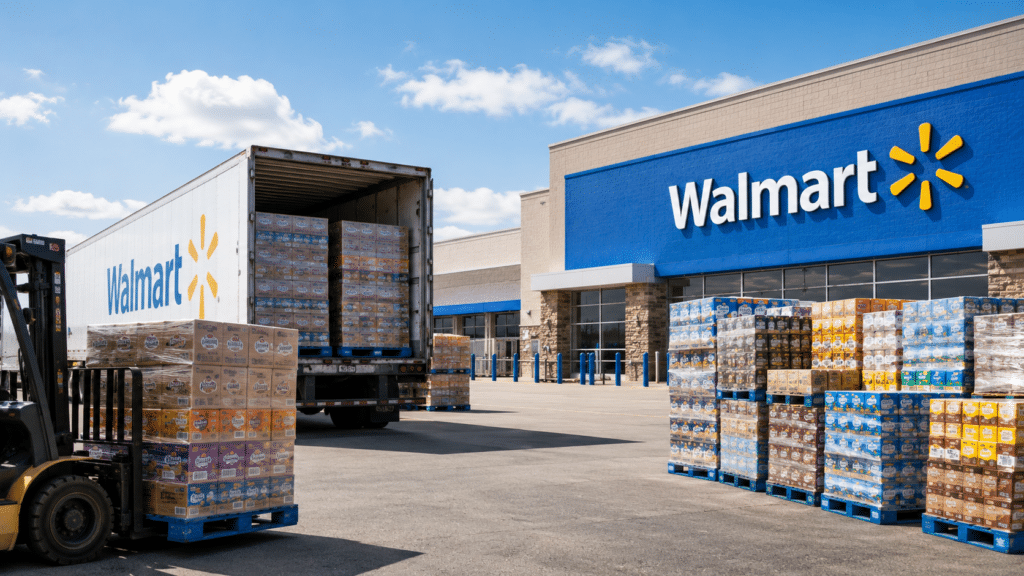
Sponsored by: Bridge is the official financing partner for Walmart and Sam’s Club suppliers. Bridge offers purchase order financing that funds your production costs at rates competitive with traditional inventory and asset-based loans, without taking a loan against your business.
Keep your cash free for running and growing your business. Request financing at bridgemarketplace.com.
You got the yes. More doors. Bigger PO. A real opportunity to scale your brand.
What matters now is execution. This stage determines whether you build a long-term retail account or create operational strain that slows your business down.
Getting into Walmart takes effort. Keeping and growing that account comes down to how well you manage operations and cash flow at scale.
The Three Constraints You Feel First
Volume creates the first constraint. Moving from a 10,000-unit run to 50,000 units requires earlier purchasing, higher packaging minimums, and reserved production time with your co-man. Freight shifts to full truckloads, which increases both cost and coordination requirements.
Timing creates the second constraint. Retailers operate on fixed delivery windows, and hitting those windows becomes part of your performance. Late shipments can lead to fines, deductions, or reduced future orders. Execution requires precision because timelines leave little flexibility.
Cash creates the third constraint. A $200,000 PO typically requires $120,000 to $160,000 in upfront spend across production, freight, and initial trade support. Payment terms of Net 60 or longer extend the gap between spending and cash collection, especially when distributor deductions and chargebacks are applied.
A larger order increases revenue while tightening liquidity during the execution cycle.
Where Execution Gaps Show Up
Brands lose accounts when small gaps stack up under pressure.
Production requires tighter coordination as volume grows. Your co-man needs committed schedules, confirmed inputs, and consistent communication. Delays in ingredients or packaging ripple through the entire production timeline and affect delivery.
Inventory planning requires forward visibility. You fulfill the initial PO, then immediately need to prepare for reorders. Strong velocity can deplete inventory quickly, while slower movement ties up capital in excess stock. Both scenarios impact cash and retailer performance.
Coordination becomes more complex as you manage multiple partners. Retailers, distributors, co-mans, freight providers, and warehouses each operate on their own timelines. Clear ownership of execution keeps everything aligned and reduces costly miscommunication.
Execution determines whether the opportunity turns into sustained growth.
Create a Clear Funding Plan
Brands take on large orders without a clear funding plan and create pressure across the business. Production, logistics, and trade spend require cash at different stages, and without a plan, those costs compete with daily operations.
Cost models often focus on manufacturing while overlooking the full picture. Freight, warehousing, trade spend, distributor fees, and chargebacks can add 20 to 40 percent on top of production costs. A $200,000 PO may translate into $20,000 to $40,000 in profit once all costs are included and timing is accounted for.
Self-funding large orders limits flexibility. Internal cash supports production, but it also reduces investment in marketing, team, and operations. Growth funded this way slows the rest of the business and increases operational risk.
The Real Constraint Is Timing
Once your product demonstrates demand, growth depends on how you manage timing.
You pay for production upfront, cover freight before delivery, and invest in trade support during launch. Payment arrives later, often 30 to 90 days after delivery and adjusted for deductions.
That timing gap defines your ability to scale.
Cash flow supports growth when it is managed intentionally.
Where PO Financing Fits
PO financing provides a way to fund that timing gap when demand is already proven.
For example:
- 50,000 units at $4 wholesale creates a $200,000 PO
- $2.50 per unit results in $125,000 production cost
- 15 percent trade spend adds $30,000
You commit approximately $155,000 before receiving payment.
A PO financing partner can fund production directly, allowing you to preserve your working capital. Once the retailer pays, the financing partner deducts their fee and releases the remaining balance.
This structure reduces cash pressure and supports consistent execution across order cycles.
Bottom Line
A larger Walmart order can create an incredible opportunity for your brand, but will also test your systems and processes.
Brands grow when they execute consistently and manage cash flow with precision. When you fund production, support operations, and maintain inventory without straining the business, you create a foundation for long-term retail success.
This is exactly the kind of challenge Bridge is built for. Bridge helps growing CPG brands secure flexible PO financing so they can cover production and fulfillment costs tied to large retail orders without draining the rest of the business. When a brand gets a bigger Walmart order, expands into more doors, or adds more SKUs, Bridge can help founders manage the cash flow gap between shipping products and getting paid.
Bridge is a direct lender that funds up to 100% of your production costs on approved Walmart and Sam’s Club orders. Share your PO, get terms fast, and keep your cash free for growth.
Education Articles