

- Operations, Sales
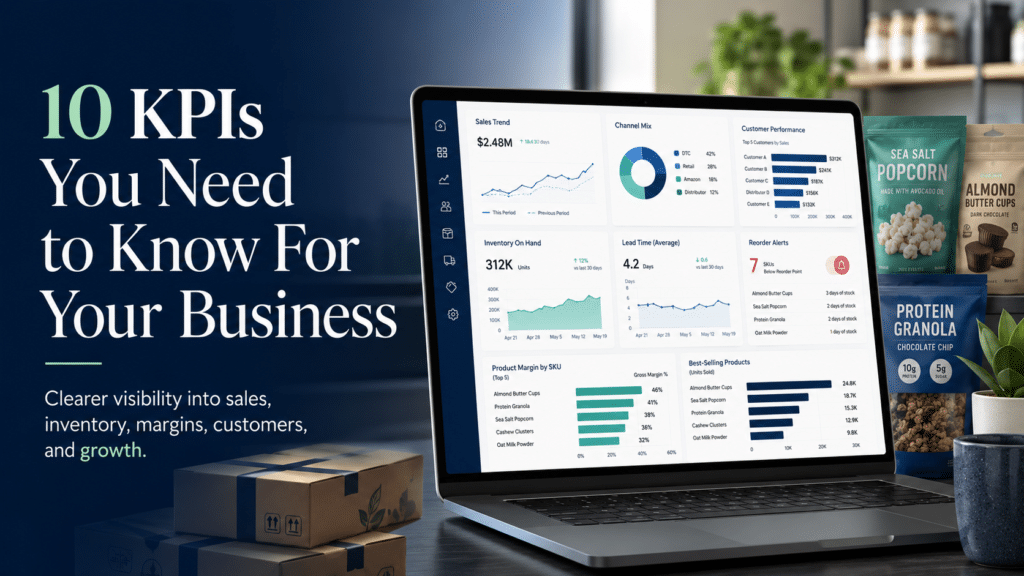
10 KPIs You Need to Know For Your Business
By:
Sponsored by Peasy – the free operating system built by former CPG founders for modern, scrappy teams. Peasy gives CPG brands 100% free access to its full platform, no limits, no credit card, no contracts replacing spreadsheets with one simple system for purchasing, receiving, production, inventory, and sales. You can get started in under 10 minutes with hands-on onboarding support in just one week.
Most founders think of inventory software as a tool for counting products. But the real value isn’t what you have in stock, it’s what the data tells you about your business.
When your data lives across spreadsheets, Shopify, Amazon, and disconnected tools, you end up making decisions based on instinct. That works early on. It breaks as you scale.
The right inventory system becomes your operating system. It connects sales, production, purchasing, and fulfillment so you can actually see what’s happening and make better decisions faster.
Here are ten insights it should give you.
1. Total Sales
Not just top-line revenue, but how sales are trending over time.
Are you growing consistently or spiking from promotions? Are there seasonal patterns? Without a centralized system, this gets fragmented across channels. With one, you can actually understand your growth trajectory and plan ahead.
2. Sales by Channel
Wholesale, DTC, Amazon, foodservice. Each channel behaves differently.
You need to know where your revenue is coming from and how each channel is performing. This helps you decide where to invest, where to pull back, and how to prioritize inventory allocation.
3. Sales by Customer
Not all customers are equal.
Some retailers reorder consistently. Others place one large order and disappear. When you can see sales by customer, you can identify your strongest partners, spot risk, and build better relationships with the accounts that actually drive your business.
4. Profitability by Customer
Revenue doesn’t equal profit.
Between trade spend, discounts, chargebacks, and logistics, some customers are far less profitable than they appear. This insight helps you understand which accounts are truly worth growing and which ones need to be re-evaluated.
5. Open Orders to Fulfillment
What’s been ordered vs what’s actually shipped.
This is where a lot of brands get into trouble. If you can’t clearly see open orders, you risk overpromising, missing ship dates, or running into stockouts. Visibility here keeps your operations and customer expectations aligned.
6. Inventory On Hand
The baseline, but still critical.
Not just what you have, but where it is and how it’s allocated. Finished goods, raw materials, packaging. Without accuracy here, everything else breaks.
7. Inventory Lead Times
How long it actually takes to replenish inventory.
Not what you think it takes. What it actually takes based on real data. This is essential for planning production, avoiding stockouts, and setting realistic reorder timelines.
8. Low Inventory and Reorder Points
When to take action before it’s too late.
A strong system flags when inventory drops below a threshold so you can reorder with enough time to account for production and lead times. This is one of the biggest differences between reactive and proactive operations.
9. Product Margin by SKU
Which products actually make you money.
Some SKUs look great from a sales perspective but quietly drag down margins. When you can see profitability at the SKU level, you can make better decisions on pricing, promotions, and whether certain products should even exist.
10. Best Selling Products
What’s driving velocity.
Your top sellers should inform everything. Production planning, marketing focus, retailer conversations. When you know what’s working, you can double down instead of spreading resources too thin.
Why this matters
In CPG, small mistakes get expensive fast.
Overproducing ties up cash. Stockouts kill velocity. Low-margin accounts drain your business. The brands that win aren’t guessing, they’re operating with clear, connected data.
Final thoughts
Inventory software isn’t about counting units. It’s about understanding your business.
When your data is connected, you can see what’s actually driving growth, where you’re losing money, and what needs to change. That’s how you move from reactive decisions to running a more predictable, scalable operation.
If you want that level of visibility, Peasy is worth looking at. It brings purchasing, inventory, production, and sales into one system so you can run your business with better data and more confidence.
Education Articles