
- Marketing
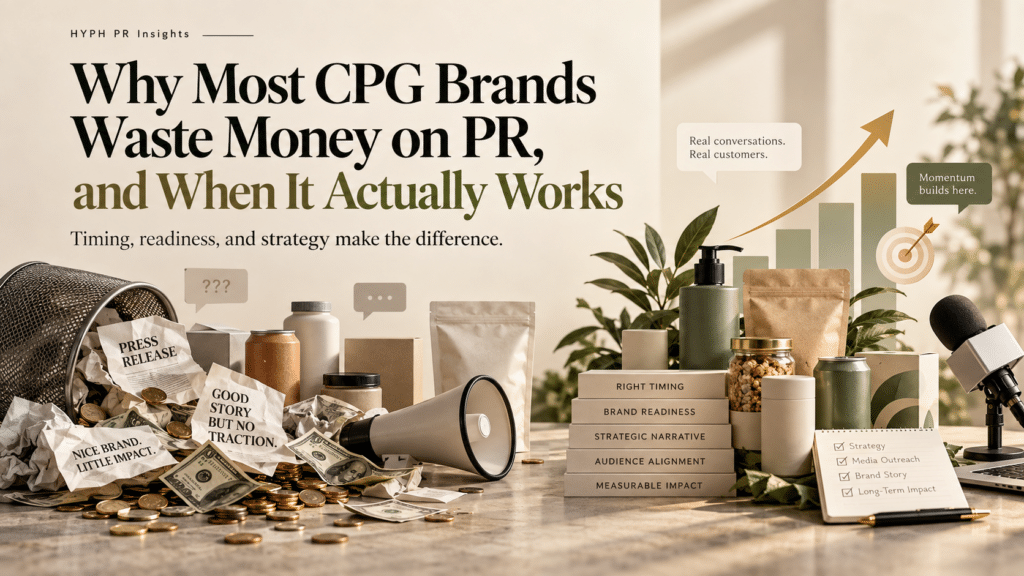
Why Most CPG Brands Waste Money on PR, and When It Actually Works
By:
Sponsored by: HYPH PR is a full-service PR agency helping food & beverage brands grow through earned media, influencer seeding, and affiliate marketing that actually converts. They specialize in PR for the underdog crafting stories that get emerging brands the attention they deserve. Get 50% off your first month of PR services (with a 12-month agreement).
Many CPG brands invest in PR too early, too late, or for the wrong reasons.
They want a big feature. They want national attention. They want a product to go viral. They want press to fix slow sales, weak positioning, or a lack of retail traction.
But PR is not magic.
When used the wrong way, it can become an expensive disappointment. When used the right way, it can help build credibility, support sales conversations, strengthen retail opportunities, and create momentum around a brand story.
The difference usually comes down to timing, readiness, and strategy.
PR Does Not Fix an Unclear Brand
One of the biggest reasons CPG brands waste money on PR is because the brand story is not clear yet.
The product may be good, but the positioning is confusing. The founder may be passionate, but the story is too broad. The brand may have strong ingredients, but no clear reason for media to care right now.
Journalists need a hook.
Retailers need a reason to believe.
Consumers need a simple reason to remember the brand.
Before investing heavily in PR, a brand should be able to explain what it is, who it is for, what makes it different, and why it matters now. Without that clarity, even the best outreach can fall flat. Now don’t get me wrong, a great PR strategist can help you identify and flesh out this messaging, but not one single pitch should be sent before these distinctions are made.
PR Does Not Replace Sales and Distribution
Another common mistake is expecting PR to do the job of sales.
A press feature can create awareness, credibility, and interest. But if the product is hard to buy, out of stock, poorly merchandised, or not supported by retail follow-up, the opportunity can disappear quickly.
For CPG brands, PR works best when it is connected to the bigger commercial plan.
Is the product available online?
Are retail locations easy to find?
Is the sales team ready to share coverage with buyers?
Can the brand use press in emails, pitch decks, social posts, ads, and retailer conversations?
A media placement is valuable, but it becomes more valuable when the brand knows how to use it.
Chasing Logos Is Not a Strategy
A national media logo can look impressive.
But not every press hit moves the business forward.
Some brands focus only on getting into recognizable outlets without asking whether the coverage reaches the right audience, supports the right message, or helps with the next business goal.
A better question is not, “Can we get press?”
It is, “What do we need PR to help us accomplish?”
That goal may be retailer credibility. It may be founder visibility. It may be affiliate revenue. It may be investor confidence. It may be awareness around a launch. It may be category education.
When the goal is clear, PR becomes more strategic.
When PR Actually Works
PR works best when a brand has something meaningful to build on.
That could be a strong founder story, a timely category trend, a major retail launch, a product innovation, a celebrity or investor connection, impressive traction, a mission with real proof behind it, or a clear cultural moment.
PR also works better when the brand is ready to respond.
That means having product samples available, strong images, clear messaging, a prepared founder, updated product pages, affiliate information if relevant, and a plan for using coverage after it goes live.
The strongest PR campaigns are rarely random. They are connected to what is happening in the business and what is happening in the market.
PR Is a Long Game
Many brands waste money on PR because they expect instant results.
But media momentum takes time. Journalists have editorial calendars. Commerce stories have lead times. Product testing takes time. Relationships take time. A brand’s authority does not build overnight.
A short campaign with unrealistic expectations can leave founders frustrated.
A longer campaign with clear goals, strong assets, and consistent storytelling has a much better chance of creating value over time.
This matters especially in CPG, where trust, awareness, and retail momentum are built through repeated signals. One article can help. But repeated visibility in the right places is what builds recognition.
Afterall, you don’t stop pursuing a romantic interest or a new friendship just because you’ve had a couple of good dates or hangouts. That’s just the beginning of building a loyal, long-standing relationship. The same goes when it comes to relationship building with your customer.
How the Right PR Partner Helps Brands Spend Smarter
HYPH PR is a boutique PR agency that works with CPG, food and beverage, wellness, lifestyle, and celebrity brands. For brands that want PR to support real business goals, HYPH PR can help shape the story, identify the right media opportunities, build credibility through strategic outreach, and turn coverage into assets that support retail, sales, affiliate, and brand visibility efforts.
That kind of approach matters because PR should not be treated as a quick fix.
It should be part of a larger growth strategy.
When PR Becomes Worth the Investment
Most CPG brands do not waste money on PR because PR does not work.
They waste money because they use PR before they are ready, measure the wrong things, or expect it to solve problems it was never designed to fix.
PR works when the brand has a clear story, a real reason to be in the conversation, the right assets in place, and a plan for turning visibility into momentum.
A press hit can open the door.
But strategy is what turns it into something useful.
Interested in learning how HYPH PR could help your brand make PR work harder for your business? Ask for an intro by clicking the button below.
Education Articles