Get More Out of 2026: The Five Numbers Every CPG Brand Must Know Before Scaling
Scaling into 2026 without knowing these five numbers is how fast-growing CPG brands quietly lose profit, cash, and control.
In a recent eye-opening revelation, our partner PPC Pitbulls, an agency specializing in Google Ads management, stumbled upon a mistake that had been overlooked for far too long. One of their coaching clients inquired about the results of their Sitelinks on a specific Search campaign. PPC Pitbulls dived into the data, only to find something unexpected.
Upon closer examination, they uncovered that the data on sitelinks presented in the Google Ads interface was somewhat misleading, leading to a misinterpretation of the results. This experience served as a wake-up call for PPC Pitbulls, making them realize the untapped potential of Sitelinks as a powerful tool for achieving Google Ads success. Eager to share their newfound insight, PPC Pitbulls decided to shed light on everything advertisers need to know to harness the full potential of sitelinks in their Google Ads account.
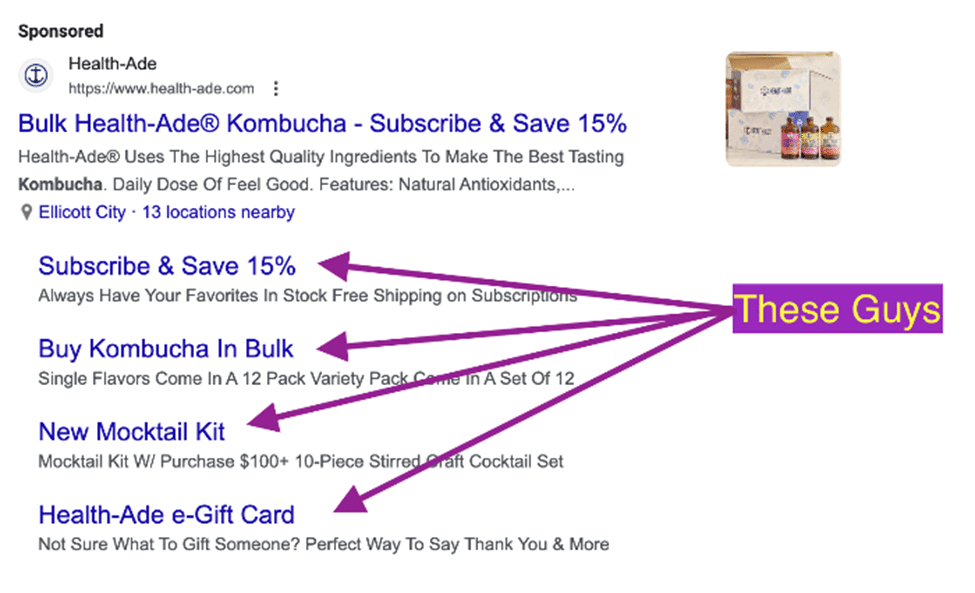
Site links are those little links to interior pages that show up below your main ad listing in Google Search.
In short, yes! These have two major purposes.
Imagine the situation where a customer was searching for “handbags.” Including sitelinks to collections like “clutches,” “crossbody bags,” “purses,” and “best-selling handbags” will direct them to results that are more relevant to their actual needs. The sitelinks make the customer more likely to click and ultimately make a purchase.
Ideally, you’ll include sitelinks that give your customers additional information to help in their buying journey.
Here are some examples of sitelinks you may want to include:
You’ll want to avoid links that appeal to folks who are unlikely to make a purchase. There’s no reason to pay for ad clicks to these pages
Here are some examples of sitelinks you should avoid:
We typically avoid the automated sitelink setting inside of our Google Search Ads. This can sometimes lead to sitelinks with no or poor descriptions. Additionally, Google will sometimes pick out less relevant pages like the ones I suggested avoiding above. One example of a situation where you may want to consider automated sitelinks is if you have a huge number of collection pages that wouldn’t be feasible to manually add sitelinks for each. An example of this was a clothing brand we worked with that sold dog-themed prints. Thousands of collection pages were dedicated to various breeds and clothing style combinations. It wouldn’t have been feasible to add all of these as individual sitelinks manually, so we left on automated sitelinks to allow Google to find relevant links for individual search queries.
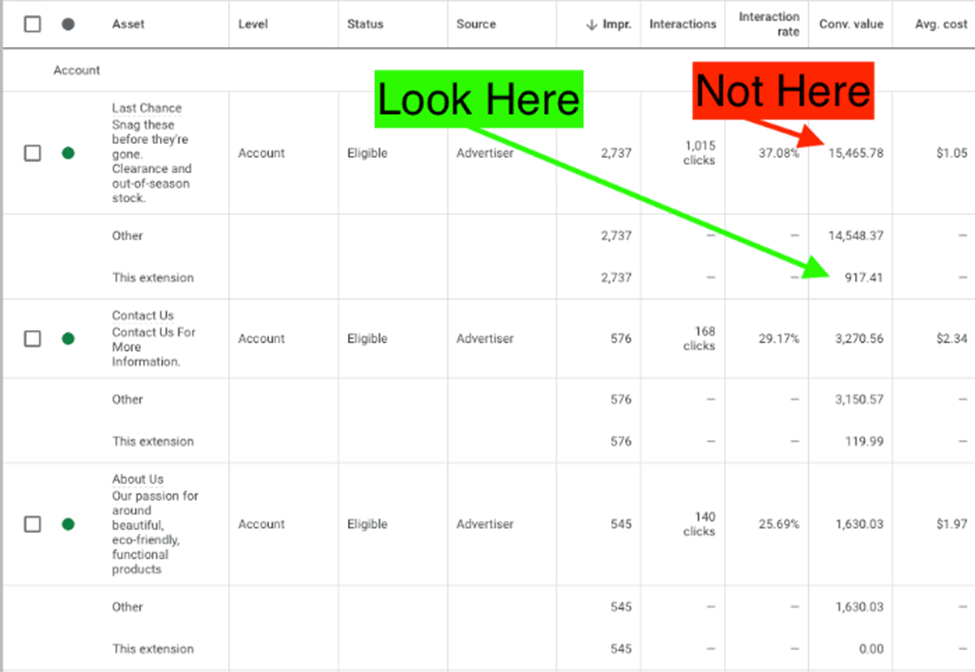
When you go in to review your sitelink performance, you will see the same type of report that you get for campaign or ad group performance. There’s a catch, though:
In the Asset Report, Google isn’t reporting results (clicks, conversions, conversion rate) for each individual sitelink extension, but rather it’s giving you these metrics for all clicks that occurred when that site link was showing.
This means that if you had two sitelink extensions visible and someone clicked on the main ad headline before purchasing, both of the visible site links would get credit.
Do yourself a favor and turn on the “This Extension vs. Other“ segment.
This will show you your metrics just for the situations when someone actually clicked on the individual sitelink.
One more measurement caveat: Remember that sitelinks really only show up when your listing is the absolute top of page result. These listings naturally get higher clickthrough rates.
For this reason, you’ll typically see much higher clickthrough rates for site link extensions than you are used to seeing in your campaign, ad group, and ad reports, including impressions outside this top slot.
If you have any questions about how you can apply sitelink strategies to take your ads to the next level, I can connect you with PPC Pitbull.

Scaling into 2026 without knowing these five numbers is how fast-growing CPG brands quietly lose profit, cash, and control.

Still tracking influencer gifting in spreadsheets? Here’s how to turn chaotic DMs and untracked samples into a scalable, automated program that actually drives ROI.

Discover how lean CPG founders are using offshore talent to reclaim time, cut overhead, and scale faster—without the risk that can stall early growth.
Be the first to get our latest news stories, interviews, and discounts.
The online the community for food and beverage founders