
- Marketing
Private Label Has Leveled Up. Here’s How Brands Can Still Stand Out.
By:
Retailers are investing heavily in their own brands, and the results are impossible to ignore. Today’s private label products are no longer the unassuming, lower-quality versions of national brands. They’re meeting consumer needs with real innovation, delivering on health, function, and trend relevance, often wrapped in surprisingly elevated packaging.
Consumers are responding, particularly younger shoppers. They’re brand agnostic, value savvy, and largely unburdened by the old “generic” stigma. Add inflation to the mix, and it is no surprise private label is winning both hearts and carts.
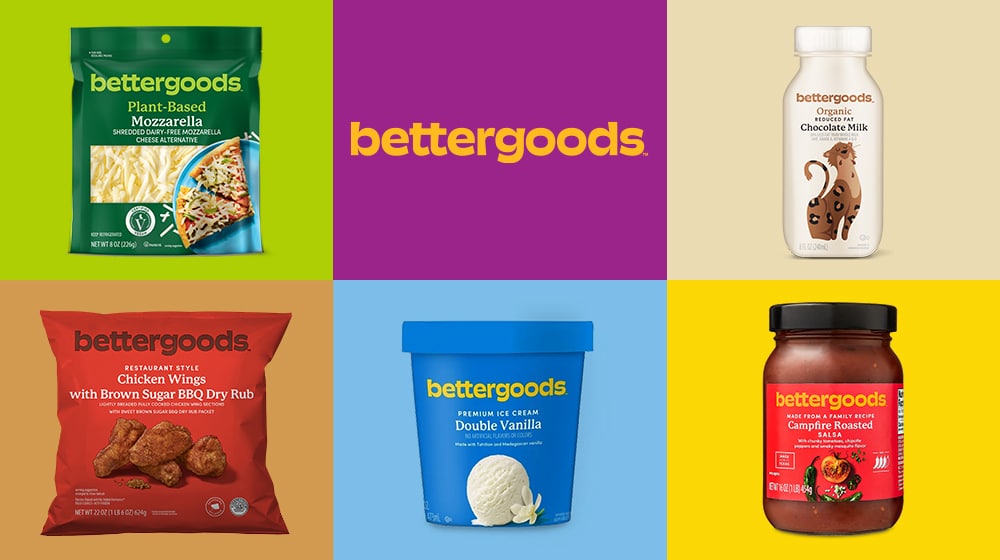
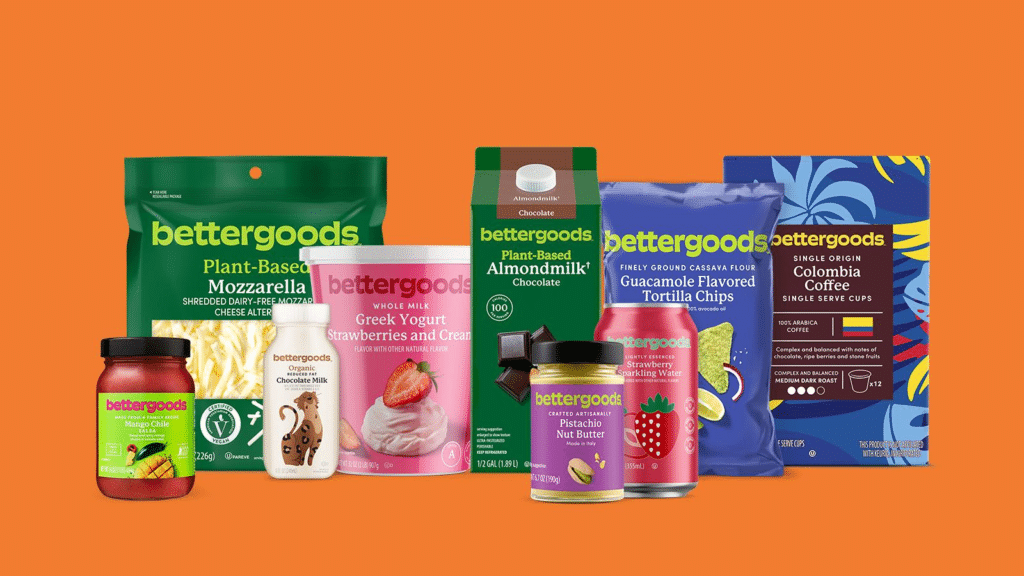
Walmart’s Bettergoods is a perfect example. With hundreds of chef-inspired, trend-forward products priced under $5, premium shelf placement, and strong visual identity, it is easy to see why independent brands are feeling the squeeze.
What private label has learned
Private label has quietly mastered a few fundamentals that independent brands can’t afford to ignore.
1. Design signals quality.
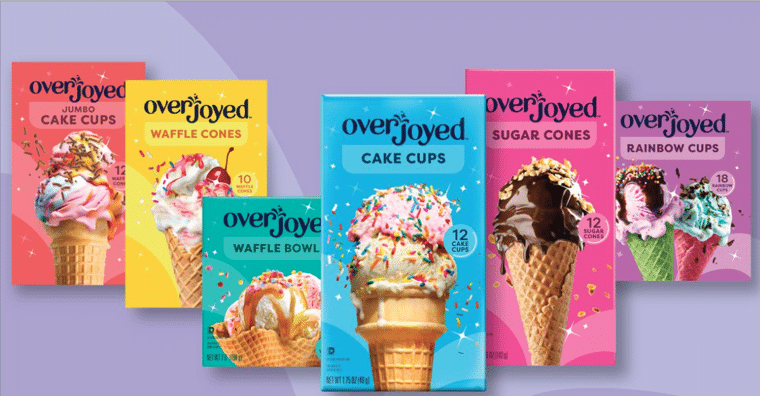
Retailers realized that design is a shortcut to trust. Brands like Good & Gather, Bettergoods, and Overjoyed lean modern, playful, and boutique with on-trend colors and appetizing photography. Elevated design creates an elevated perception.
2. Clarity and consistency build confidence.
Good & Gather’s system is intuitive and cohesive. It feels competent and organized, making the shopping process frictionless and quietly saying “this is the smart choice.”
3. Aspirational lifestyle sells.
Bettergoods positions itself as a lifestyle upgrade, even at a value price point. With plant-based, organic, adventurous flavors, value no longer equates to boring.
4. Emotional positioning works.
Albertsons’ Overjoyed does not just sell food. It sells delight. The name, color, and tone promise joy, not just function.
5. Strategic naming matters.
Good & Gather feels wholesome and communal. Bettergoods implies a smart upgrade. Overjoyed is pure emotion. Naming has become a serious branding lever.
Private label has learned that packaging is your number one marketing vehicle and the only touchpoint every single customer will see. The lesson: skimp elsewhere if you must, but not here.
And yet, even with all this momentum, private label still has some limitations. That is where opportunity lives.

What private label still can’t do
Here are a few key areas where independent brands still have an advantage.
1. Tell a real founder or origin story
Private label brands are corporate creations. They do not have farmer’s market beginnings, dorm room experiments, or “we started this with $100 and a blender” energy.
Independent brands do, and consumers care because it creates a relatable, human connection.
Your backstory, your values, your missteps, and your messy beginnings build trust in a way no store brand can replicate.
2. Offer deep expertise
Private label brands are generalists. They stretch from salsa to supplements to pet food. That breadth makes true category expertise hard to own.
Independent brands can go deep and get geeky in ways that show their passion and expertise. That depth is what helps build cult-like communities of consumers who are eager to tell their friends about your products. Think Grillo’s in pickles, or Fishwife in tinned fish.
Bonus: Brands that truly own a category are often the ones sought out for collaborations.
3. Take risks in voice and branding
Private label must appeal to a variety of audiences across their many categories. That usually means their personality and messaging are safe, polite, and somewhat beige.
Independent brands can be loud, weird, cheeky, or hyper-specific in ways that build a memorable brand personality. Toilet humor (Dude Wipes), quirky irreverence (Goodles), or niche cultural references like Liquid Death. Speaking directly to a specific audience is where differentiation thrives and demand grows.
4. Build values-driven communities
Private label can talk about sustainability or wellness, but it often feels corporate.
Independent brands can build tribes. Communities that can DM the founder, show up for launches, buy merch, and care deeply about the mission. Patagonia, Tony’s Chocolonely, and Dr. Bronners did not build loyalty on price.
So how do you avoid becoming interchangeable?
With elevated product quality and design, private label has become incredibly powerful and is here to stay. But independent brands are still essential for bringing new ideas, excitement, and differentiation to the shelf.
To compete without lowering your price, lean into your humanity. Be transparent. Specialize deeply. Stay close to your community. Build emotional connection, not just functional benefits. Be willing to take a stand.
Independent brands win by leaning into their purpose in ways that feel braver, nerdier, and more human. In a sea of well-designed, low-priced store brands, that humanity is the edge that gets your brand into the cart.
———————————
Carrie Dufour is the founder of Truly Creative, a branding studio specializing in food, beverage, and wellness. After years spent exploring global cuisines and cultures, she now helps brands navigate strategy, packaging, and compliance while creating work that feels human, approachable, and cart-worthy.
Education Articles