
- Operations
Is Your Business Straining Under the Weight of Your Spreadsheets?
By:
Sponsored by Peasy, a free inventory management platform built for scrappy CPG brands still using spreadsheets. Peasy centralizes purchasing, production, and fulfillment workflows in one place, reduces manual data entry by 60%, and gives brands clear visibility into their business. It’s free forever, even as you scale, and members of the Foodbevy community get white-glove onboarding directly from the founders, at no cost.
You probably didn’t start your CPG brand thinking you’d spend hours copying and pasting data across spreadsheets. But as your business grows, so does the complexity and suddenly, your day is eaten up trying to track inventory, place POs, reconcile production runs, and forecast demand… all through files that were never meant to handle this kind of work.
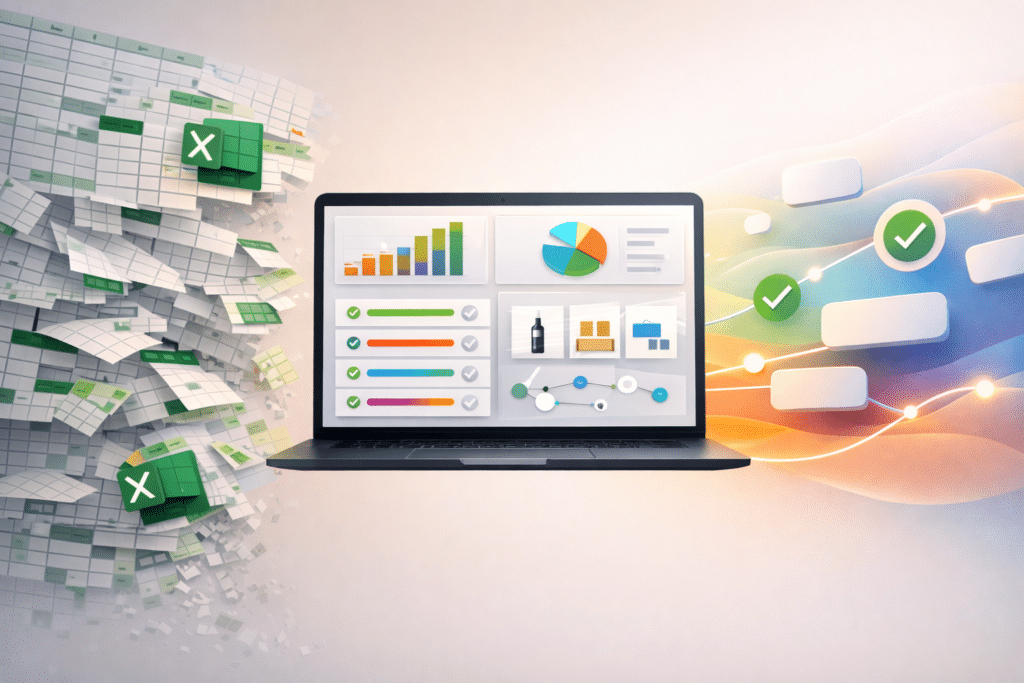
It’s not that you have an inventory problem. You have a spreadsheet problem and it’s quietly costing you time, money, and momentum.
The Hidden Cost of Spreadsheets
Spreadsheets can feel like the ultimate scrappy tool. They’re flexible, fast to set up, and free all qualities that make sense when you’re just starting out. But as you add more SKUs, more suppliers, and more moving parts across production and fulfillment, spreadsheets can quickly become a liability.
Manual entry opens the door for human error. One broken formula, a missed cell, or an outdated version can throw off your entire production schedule. You might over-order packaging, miss a key ingredient reorder, or realize too late that you’re running low on finished goods not because you aren’t paying attention, but because your system isn’t built to keep up.
Then there’s the collaboration issue. Once you involve team members whether operations leads, co-packers, or external partners version control becomes a mess. You’re stuck wondering which spreadsheet is current, if someone forgot to update a tab, or if the data you’re looking at is already outdated.
The result? Wasted time. Lost money. Missed opportunities. And a growing sense that your business is running you, instead of the other way around. If this is you, you need a business operating system
What Is a Business Operating System?
A business operating system (BOS) is the backbone of how your business runs day to day. But unlike spreadsheets and traditional software that simply stores information, a true BOS is a system of action it transforms your data into clear recommendations and timely alerts that help you make faster, smarter decisions.
The critical difference:
- Spreadsheets and ERPs are systems of record – they store what happened
- A business operating system is a system of action – it tells you what to do next
A good BOS doesn’t just give you visibility into your operations. It actively surfaces the decisions that matter: flagging when inventory is running low and suggesting optimal reorder quantities, alerting you to demand shifts before they impact production, and highlighting the actions that will keep your business on track.
For CPG brands, this means having one intelligent system at the intersection of purchasing, inventory, production, sales, and forecasting surfacing the right insights at the right time so you can act with confidence, not guesswork.
The Features a Business Operating System Needs to Actually Help You Run Your Business
Not all systems are created equal. To be genuinely useful (and not just another tool you avoid opening), a business operating system needs a few core capabilities:
1. A Single Source of Truth
All purchasing, inventory, production, sales, and vendor data should live in one place. No more asking, “Which spreadsheet is right?” or reconciling five versions of the same file across ops, finance, and sales.
2. Real-Time Inventory Visibility
You should always know:
- What raw materials you have on hand
- What’s allocated to upcoming production
- What finished goods are available or committed
- How current inventory aligns with actual sales velocity
Without manual updates or guesswork.
3. Sales Capture by Customer & Channel
A business operating system should capture sales in a structured way by customer, channel, SKU, and time period so you can clearly see what’s driving revenue.
This includes:
- DTC vs. wholesale vs. marketplace performance
- Sales by key accounts and distributors
- SKU-level velocity and trends over time
- How sales tie directly to inventory and production planning
4. Purchasing & Vendor Management
A BOS should track POs, vendors, lead times, and costs in a structured way so reordering isn’t based on memory, gut feel, or last month’s spreadsheet.
5. Production & Lot Tracking
For CPG brands, this is non-negotiable. You need to track production runs, lot numbers, and ingredient usage clearly both for operational clarity and food safety.
6. Forecasting & Planning
Instead of reacting when something runs out, a good system helps you plan ahead. Forecast demand using real sales data, understand inventory coverage, and make smarter purchasing and production decisions before problems arise.
7. Built for Collaboration
Your team should be able to work from the same system without breaking formulas, overwriting cells, or emailing attachments back and forth.
8. Simple Enough to Actually Use
If it requires a full-time data analyst to maintain, it’s not helping. The best systems balance structure with usability, so founders and operators can focus on running the business not managing the tool.
Stop Letting Spreadsheets Hold You Back
If managing operations through spreadsheets feels like a constant game of catch-up, it’s not because you’re doing something wrong it’s because the tools you’re using weren’t designed for what you’re building.
Your business deserves systems that work as hard as you do. When you’re ready to trade complexity for clarity, it might be time to explore a better way to run your backend.
Education Articles