

- Sales
The Ultimate Guide to CPG Brokers
By:
Sponsored by Run the Numbers Consulting
Run the Numbers Consulting loves to partner with CPG brands to strengthen operations, sales, and data through fractional leadership and data-driven insights that support confident decision-making and sustainable growth within Grocery Retail. Their consultants work alongside brand teams across sales, operations, data analytics, finance, and deductions.
What Are CPG Brokers and Why Do They Exist?
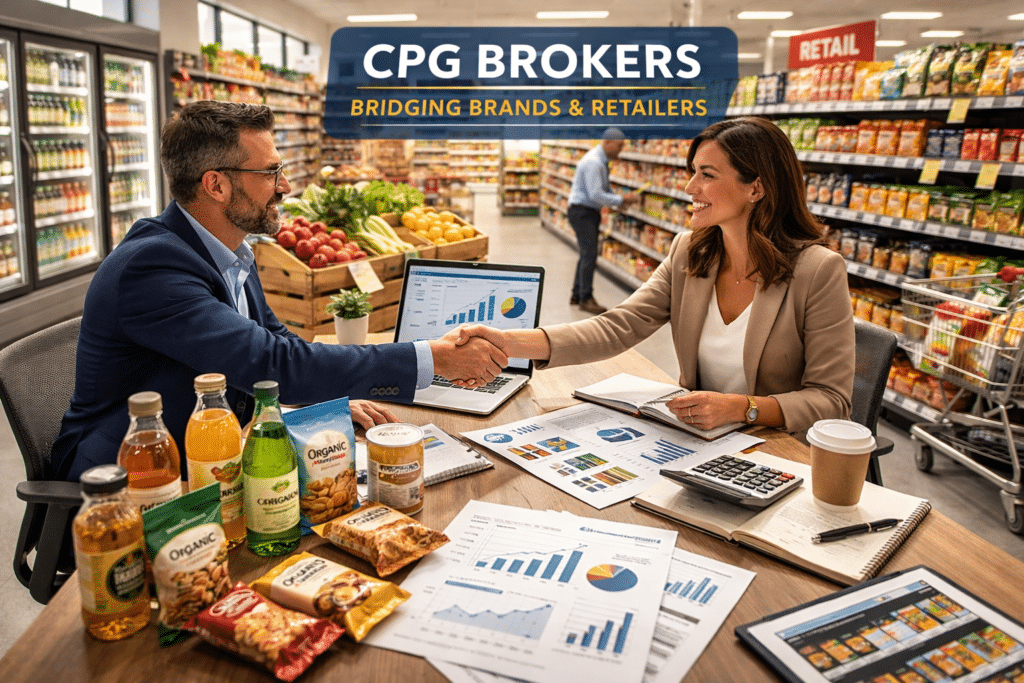
A CPG broker is the sales representative or team that sits between your brand and the retailer. Their job is to help brands navigate the retail landscape by managing relationships with buyers and guiding brands through the processes required to get products onto shelves and stay on the shelves.
Retail operates on a very structured system… most of the time. Most retailers have category reviews happen on defined timelines. Others have open-review schedules. Promotional windows are scheduled months in advance. Vendors must navigate item setup requirements, retailer portals, documentation, and onboarding processes. Sounds easy enough right?
For founders and small teams, managing these responsibilities while also running supply chain, operations, marketing, and finance can quickly become overwhelming. Brokers exist because staying on top of retailer systems and buyer relationships is essentially a full-time job.
However, the most effective broker relationships rarely operate in isolation. Retail success often requires internal leadership or fractional support that ensures the brand’s operations, pricing, and data strategy are aligned with the push into retail. It takes a “village” to grow a brand.
What a CPG Broker Actually Does
At their core, brokers focus on managing the retailer side of the business. Their value comes from understanding how retailers operate and maintaining the relationships that help brands access buyers.
Most brokers spend their time focused on four key responsibilities.
1. Managing Category Review Timing and Buyer Relationships
Retailers typically review products during scheduled category review periods. Brokers track these timelines and maintain relationships with category buyers so they know when opportunities are approaching.
2. Managing Retailer Paperwork and Systems
- Vendor onboarding and retailer forms
- Item setup and product data submission
- Retail portals and required documentation
3. Preparing Brands for Buyer Meetings
Retail buyers expect brands to arrive prepared with clear information about pricing, category positioning, and promotional plans. Brokers help brands with:
- Category positioning
- Competitive set and pricing
- Promotional plans
- Key selling points for the buyer
4. Managing Promotions Once a Product Is Authorized
Once a brand is placed on shelf, brokers manage:
- Promotion submissions
- Retailer-specific requirements
- Promotional timing and coordination
Because brokers are closely connected to retailer expectations, they may suggest promotional strategies or pricing ideas that align with what buyers want. Brands should still evaluate these suggestions carefully to ensure the costs align with their margins and long-term strategy. Also keep close eye on promo submission for all brokers.
What Brokers Typically Don’t Do
While brokers play an important role in retail relationships, they are not your savor to do it alll. They are not typically responsible for managing the internal mechanics of the business.
Most brokers do not:
- Rebuild your pricing model
- Improve your cost of goods structure
- Manage trade spend profitability (larger brokers do help with this)
- Oversee operations or inventory planning
Another reality founders should understand is that brokers often represent many brands at the same time. It is common for brokers to manage portfolios of 50 to 100 brands, which means their attention is divided across many clients.
Because of this, brokers typically require direction and communication from the brand to stay aligned on priorities.
This is often where founders begin to feel a gap in the system. The broker may drive the retailer relationship, but someone still needs to connect the strategy across sales, operations, and data so that retail growth does not create operational or financial surprises.
When It Makes Sense to Hire a Broker
Hiring a broker is most effective once a brand has reached a certain level of retail readiness. Brands should have enough margin and financial stability to support broker costs as well as the trade spend required in retail environments.
A broker often becomes valuable when:
- Your margins and cash flow can support broker fees
- You are targeting retailers that typically work through brokers
- You have distributor placement through KeHE or UNFI
- You already have some early retail placements
Brokers perform best when there is already some traction. If a brand has distribution and a few retail placements, brokers can focus on expanding those relationships rather than building infrastructure from the ground up.
Types of CPG Brokers
Brokers vary widely in size and operating style. Most fall into one of three categories.
Small brokers
- Often regional or retailer-specific
- Typically more hands-on with founders
- May provide greater attention for emerging brands
Mid-size brokers
- Broader retailer coverage
- More structured internal processes
- Often a good fit for growing brands expanding distribution
Large national brokers
- The widest retailer coverage
- Strong relationships with major retailers
- Large brand portfolios
Brands sometimes choose a broker that is too large too early and find they receive less attention than expected. Choosing the right broker size often depends on your stage of growth and the level of attention your brand needs.
How Brokers Are Paid
Broker compensation usually follows one of three structures.
Many brokers charge a monthly retainer, which can range from approximately $1,000 to $15,000 per month depending on the scope of work and geographic coverage.
Others operate on a commission structure, typically earning 3% to 5% of net sales generated through the retailers they manage.
Some brokers use a hybrid structure, combining a retainer with commission until the commission exceeds the base retainer.
Before entering a broker agreement, it is important to understand when the retailer’s category reviews actually occur. If reviews are months away, brands may end up paying a retainer long before meaningful retail conversations begin.
How to Evaluate a Broker Before Signing
Selecting a broker is not just about who has the most relationships. It is also about how the partnership will operate.
Before committing to a broker relationship, brands should evaluate whether the broker:
- Sets realistic expectations and timelines
- Actively calls on the buyers you are targeting
- Has a cost structure that fits your financial model
- Can support your growth into additional regions or channels
It is also important to observe how the broker manages relationships. Strong broker partnerships usually include clear communication, defined performance expectations, and a regular reporting cadence.
Without these structures, the relationship can easily become informal and difficult to measure.
Setting Brokers Up for Success
Even strong brokers need consistent support from the brands they represent. The most productive relationships typically include a clear system for communication and performance tracking.
In practice, this often includes:
- A shared scorecard tracking submissions, meetings, authorizations, and promotions
- Weekly check-ins and monthly performance reviews
- Retail-ready assets such as sell sheets and updated item data
- Fast decision-making when retailer opportunities arise
Many founders try to manage this while running the rest of their business, which can make it difficult to maintain the level of consistency brokers and retailers expect
Broker vs In-House vs Fractional Sales
As brands grow, they often rely on different sales structures to support retail expansion. Brokers, fractional consultants, and in-house sales leaders each play different roles depending on the stage of the business and the level of support needed.
Brokers
Brokers have personal relationships with buyers and typically represent anywhere from 10 to 150 brands at a time. Their focus is primarily on retailer relationships and navigating retailer processes. They help brands access buyers, manage category reviews, and handle retail submissions.
Fractional Consulting
Fractional consultants normally support 1-5 brands at a time and focus on the broader business, not just retailer relationships. Their work often includes building the operational and data backbone that keeps retail growth profitable and predictable. This gives brands access to experienced leadership often someone who would normally cost $150k-$250k annually at a fraction of the cost for only the hours needed.
In-House Sales
Hiring an in-house sales leader gives brands maximum control and focus. However, it also requires covering the full annual salary, insurance, taxes, and other employment costs. Brands should take time to find the right fit for their business stage and budget.
In many cases, fractional consultants help manage the broker relationship as a brand grows driving the cadence, KPIs, follow-through, and cross-functional alignment so the broker’s retailer work turns into measurable outcomes.
Common Broker Mistakes Founders Make
Broker relationships often struggle not because of the broker, but because expectations were never clearly defined.
Some of the most common mistakes founders make include:
- Assuming the broker will operate without guidance
- Assuming the broker is correct in everything they suggest
- Not holding the relationship accountable to clear metrics
- Not building direct relationships with buyers as well
- Ignoring operational downstream impacts such as inventory, fill rates, deductions, and promotional readiness
Retail growth works best when the broker’s work is supported by clear strategy, communication, and operational readiness.
How to Know If Your Broker Is Working
A broker relationship should have clear indicators of progress. Without a system for measurement, it can be difficult to separate normal retail timelines from stalled momentum.
Brands should regularly evaluate their broker relationship by asking:
- Do we have mutually agreed-upon KPIs that we review quarterly?
- Are we having bi-monthly or monthly meetings?
- Are emails and communications being responded to in a timely manner?
If you don’t have a measurement system, it’s hard to separate “normal retail timing” from “we’re stalled.” Even a simple quarterly KPI review can reveal whether submissions are happening on time, whether meetings are being created, and whether your promotional plan is being executed consistently.
Wrap Up
If you’re considering hiring a broker or already working with one and looking for stronger coordination Run the Numbers Consulting can help support the process.
Run the Numbers Consulting provides fractional leadership and consulting support to help brands scale with structure. Their team works alongside brands to strengthen Operations, Sales, Finance, and Deductions by building the data and operational systems needed to support sustainable retail growth.
If you’re looking to strengthen your retail and broker strategy, improve execution cadence, and build a retail engine you can actually measure, you can request an introduction to Run the Numbers Consulting team.
Education Articles