
- Business, Operations, Resources
3 Ways an Inventory Management System Can Help You Manage Tariffs
By:
Sponsored by Cin7
This article is sponsored by Cin7, an all-in-one production, inventory and order management platform that helps product businesses—from emerging food and beverage brands to established manufacturers—optimize operations at every stage of the supply chain. Save 50% off your first 3 months. Learn more about Cin7.
For CPG brands importing packaging, ingredients, or finished goods, even a small increase in tariff rates can squeeze margins, delay production, or force sudden supplier shifts. Managing these changes manually (or reactively) is a recipe for disruption.
A good inventory management system doesn’t just help you track what’s in stock—it helps you plan smarter, pivot faster, and make informed decisions when costs change. In this article, we’ll break down three key ways you can stay ahead of tariff-related challenges.
1. Managing Multiple Suppliers
When tariffs hit one country or supplier, having backup options becomes essential. But managing multiple suppliers for the same product—especially when lead times and costs vary—is a logistical challenge without the right tools.
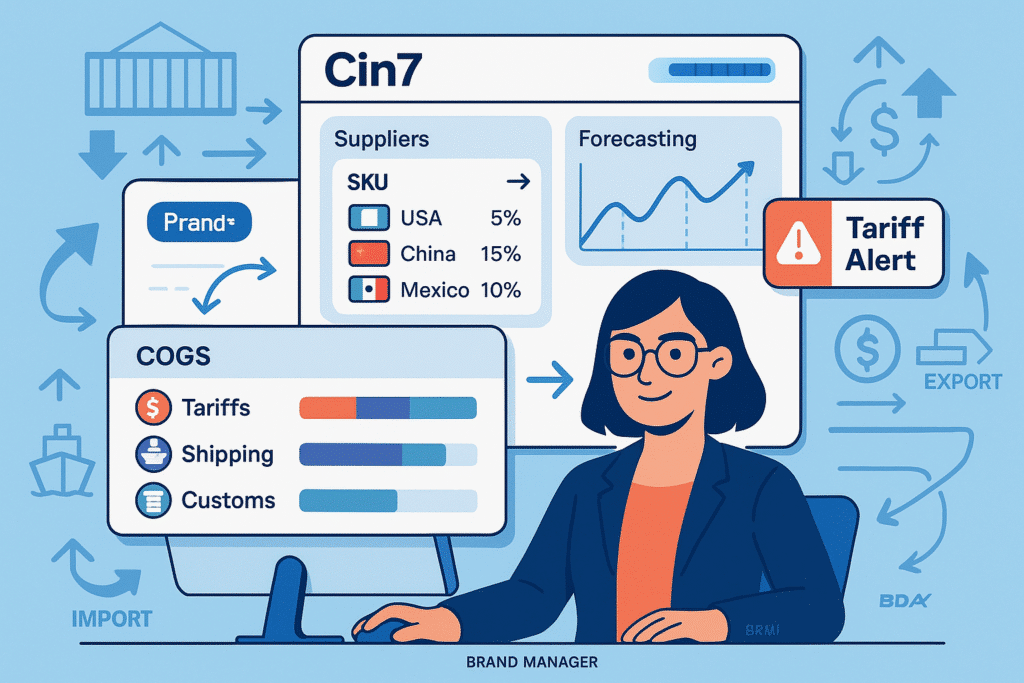
Use an inventory management system to assign alternate suppliers to a single SKU, complete with pricing, lead times, and minimum order quantities. If one supplier becomes cost-prohibitive due to tariffs, you can instantly pivot to another without needing to rebuild your purchasing workflow from scratch.
Tools like Cin7 go a step further by allowing you to create automated purchasing rules. For example, you can set up logic to automatically choose the lowest-cost or fastest-lead-time supplier based on your current inventory position or urgency. This agility is crucial when tariffs fluctuate or new trade restrictions arise.
2. Accurate Forecasting Demand
If you’re not forecasting, you’re guessing—and guessing gets expensive when tariffs come into play. A spike in duties might make certain SKUs temporarily unprofitable, while long lead times from international suppliers mean you need to plan purchases further in advance.
Inventory systems with built-in demand forecasting tools help you make more accurate purchasing decisions based on actual sales trends, seasonality, and promotions. With this visibility, you can order just enough stock before a tariff increase takes effect—or delay replenishment if a product’s cost spikes too high.
Forecasting also helps reduce the cost of rush orders, which often occur when brands get caught off-guard by supplier delays or cost increases. By anticipating demand and aligning it with your production schedule, you can stay one step ahead.
3. Understanding Your Current COGs and Supplier Cost Increases
Tariffs directly affect your Cost of Goods Sold (COGS), but many brands don’t realize the full impact until it hits their bottom line. With disconnected systems or manual spreadsheets, it’s difficult to see how changes in freight, duties, or material costs are affecting profitability per SKU.
A IMS lets you bundle all associated costs into your product records—including tariffs, customs fees, and shipping charges—so your COGS reflects reality, not rough estimates. You’ll be able to track changes over time, compare supplier costs, and make smarter decisions about pricing, promotions, and packaging options.
Better yet, this real-time visibility makes it easier to communicate with your finance or operations team. When you know your margin by channel, product, and supplier, you’re in a far better position to weather pricing shocks or negotiate smarter deals.
Tariff-Proof Your Supply Chain
Tariffs are unpredictable—but your response doesn’t have to be. With the right inventory system in place, you can proactively manage suppliers, forecast smarter, and protect your margins, no matter how trade conditions evolve.
Looking for a better way to manage your supply chain in a volatile market?
Check out Cin7’s inventory and supplier management tools and see how they can help you tariff-proof your business.
Education Articles